

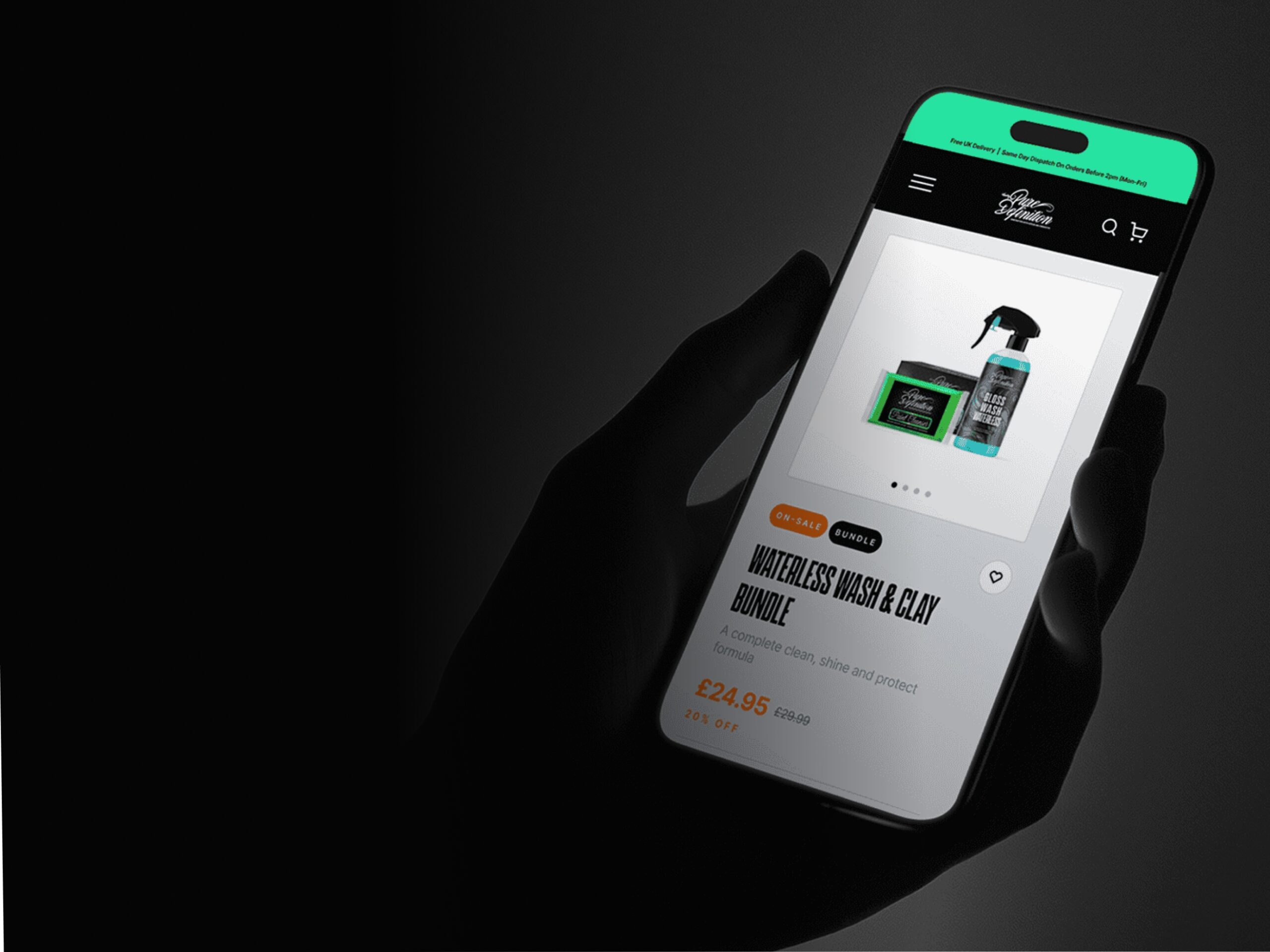
Online stores that use AI to help people buy.
TH3 uses AI to improve product discovery, clarifying the buying journey and giving customers fewer reasons to leave before they’ve bought.
Built around real buying journeys.
Most online stores are built around categories, products and stock. That matters, but it’s only part of the experience.
Customers are trying to answer practical questions: is this the right product for my needs, how does it compare to the alternatives, what do other people think, and can I trust this business enough to hand over my card details?
A store built around those questions, rather than just around the catalogue, converts better at every stage, from first visit to repeat purchase.
Get a QuoteThe small friction points that cost sales.
An online store doesn’t usually lose sales because one thing is broken. It loses sales because small points of confusion, hesitation or frustration build up before checkout.
Customers can’t find the right product
If search results, category structures or filters don’t match how people actually think about what they’re looking for, they give up. Better product discovery, with smarter search, guided filters and product selectors, gets customers to the right item with less effort and fewer dead ends.
Product pages don’t earn the sale
Customers need content shaped around real buying questions: what does this work with, how does it compare, what size or spec do I need, what have other people found? Pages built around those questions do more than display information: they remove doubt.
Recommendations feel generic
Poorly matched upsells and unrelated suggestions erode trust and distract from the purchase. Recommendation flows built around genuine relevance feel helpful rather than pushy, and support higher order value without forcing it.
The journey creates doubt before checkout
Unclear navigation, weak trust signals, buried delivery information and complicated checkout flows all give customers a reason to pause. Every unnecessary pause is an opportunity to lose them. A cleaner journey removes those moments before they become decisions to leave.
The store has outgrown its own setup
Plugin-heavy stores become slow, unpredictable and difficult to improve. A more considered build, with a design system specific to the brand and a structure that can grow, keeps the experience consistent and the store easier to manage as the range or the business scales.
Built to support the purchase
Get a Quote
Better product discovery
Intelligent search, guided filters and product selectors help customers find the right products faster, which is especially valuable when ranges are large, technical or difficult to compare without guidance.
Product pages that answer questions
Content shaped around genuine buying concerns, comparison points, specifications and social proof helps each product page do the work of a good sales conversation, without one needing to happen.
Recommendation flows that feel relevant
Upsell, cross-sell and related product journeys built around actual customer behaviour and product logic, not just what’s in stock or what has the highest margin.
A secure checkout journey
Clear delivery information, transparent returns, strong trust signals and a straightforward checkout process give customers the reassurance they need to follow through.
A store that feels specific to the brand
A strong eCommerce experience should reflect the product range, the brand and the way customers shop instead of looking like a stock Shopify theme with a logo dropped in.
Performance that holds up to pressure
Page speed, mobile experience, technical structure and checkout stability matter more in eCommerce than almost anywhere else. They’re built in from the start, not optimised as an afterthought.
Better for customers. Better for conversion.
The best online stores don’t persuade people to buy. They make it easy for people who already want to. AI gives us more ways to build towards that, from smarter product discovery and more useful product pages to cleaner journeys and recommendation flows that actually reflect how customers shop.
For businesses with wider digital goals, eCommerce doesn’t have to stop at the checkout. AI marketing can use purchase behaviour, browsing intent and automated follow-up to bring customers back, support repeat purchases and make post-sale communication feel timely rather than generic.
AI eCommerce questions, answered
Something else you’d like to know about AI eCommerce with TH3? Ask us, we’re happy to help.
Book a free consultationWhat makes an online store an AI eCommerce store?
It uses AI to help people buy: intelligent search and guided filters that understand how customers think about products, product pages built around real buying questions, recommendations based on genuine relevance and a checkout that removes doubt. The catalogue is still there; the store is built around the customer’s questions rather than only around stock.
Which platforms do you build on?
Shopify, WooCommerce and custom builds, chosen to suit your range and how you manage it. See our eCommerce web design service for the platform and build side.
Can you improve my existing store rather than rebuild it?
Often, yes. We start with where customers hesitate or leave, then improve discovery, product pages, recommendations or checkout as needed. If the store has outgrown a plugin-heavy setup, we’ll say so and plan a more considered build.
How much does an AI eCommerce website cost?
It depends on the size of your range, the platform, the integrations and how far the discovery, content and recommendation work goes. Book a free consultation and we’ll walk through your store with you, then follow up with a clear quote.
Will the recommendations feel pushy?
No. Poorly matched upsells erode trust, so recommendation flows are built around genuine relevance and real customer behaviour. They feel helpful, and they support higher order value without forcing it.
Will the store be fast and secure?
Yes. Page speed, mobile experience, technical structure and checkout stability are built in from the start, with trusted payment gateways and clear delivery and returns information so customers feel confident following through.
Does AI write the product content?
AI helps us research the questions customers ask and speeds up planning, but product content is shaped by your knowledge, real buying concerns and your brand’s voice. The aim is pages that do the work of a good sales conversation.
What happens after customers buy?
That’s where AI marketing comes in: purchase behaviour, browsing intent and automated follow-up bring customers back, support repeat purchases and keep post-sale communication timely rather than generic.