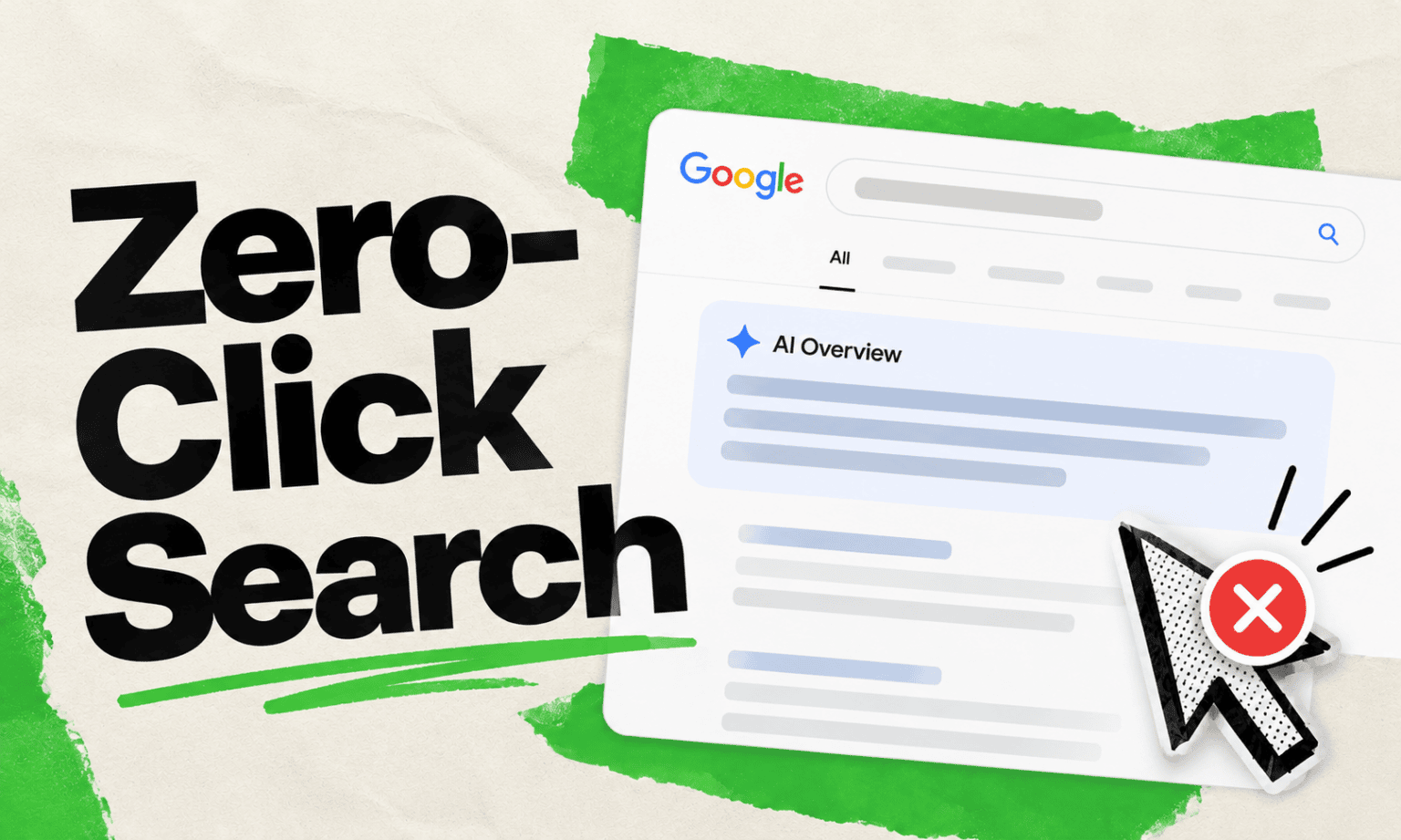
Is your website traffic falling while business carries on as usual? You could be seeing zero-click search in action.
Picture this. A cyclist asks Google for a good bike shop nearby. An AI Overview offers a few tips on what to look for and names a local shop. They read it, close the tab and get on with their day. A week later, they search for the shop by name and head in to buy a bike.
The shop’s analytics never saw that first search, but it’s where the sale began.
That’s zero-click search, and it’s fast becoming normal. According to SparkToro, 69.5% of UK Google searches between January and April 2026 ended without a click, the highest rate of any country it studied.
So fewer visits doesn’t always mean your website is doing worse. It just means that clicks aren’t telling the whole story anymore.
What Is Zero-Click Search and Why Is It Growing?
A zero-click search is one where someone gets their answer on the results page and never clicks through to a website, like checking the weather or what time Tesco closes.
Google has shown quick answers for years, but AI has made them far more common. Google’s AI Overviews now summarise answers at the top of the page, and tools like ChatGPT answer questions directly, so there’s often no need to visit a website at all. Ofcom reported in December 2025 that around 30% of UK searches showed an AI Overview.
The impact on clicks is real. A study reported by Search Engine Journal found that AI Overviews cut clicks to websites by 38% on the searches where they appeared.
Why Website Traffic Doesn’t Tell the Full Story
Traffic stats only count the people who land on your website. They miss everyone who saw your business in a search result or AI answer, remembered your name and moved on.
But being part of the answer still counts. Seer Interactive found that businesses mentioned in AI Overviews had a 35% higher click rate than those that weren’t. That doesn’t prove the mention caused the extra clicks, but it’s a strong sign AI visibility is worth watching.
So should a traffic drop worry you? Not necessarily. Here’s a quick way to tell:
- Traffic is down, but enquiries and sales are steady. Your website is probably still doing its job, though it’s worth finding out why traffic fell.
- Traffic is down, and so are enquiries and sales. Dig deeper. It could be a technical problem, lost rankings or new competition.
What to Measure When Nobody Clicks
If clicks only tell part of the story, what should you look at instead? Here are five measures that give a much fuller picture.
1. Getting Seen
The first thing to track is impressions: how often your business appeared in search results, whether anyone clicked or not. You’ll find this in Google Search Console, Google’s free tool for seeing how your website performs in search.
If impressions are rising, more people are seeing you, even if clicks have stayed flat.
2. Being Remembered
Watch your branded search impressions, which show how often people search for your business by name, like “Smith’s Bikes Hull”. If they’re climbing, people are seeing you somewhere and coming back to find you, just like the cyclist in our bike shop example.
How to check:
- In Search Console, filter your queries to those containing your business name.
- Add a “How did you hear about us?” question to your contact form.
- Ask customers at the till or on the phone, and keep a simple tally.
3. Showing Up in AI Answers
Search Console now reports your AI Overview appearances, showing how often your pages are cited as sources in Google’s AI Overviews and AI Mode. It’s been available worldwide since 31 August 2026, though it won’t catch every mention of your business, and smaller websites may not have enough data for it yet. ChatGPT needs checking by hand.
4. Helping Later Sales
Most customers don’t buy the first time they find you. Someone might look at your café’s website, leave, then come back a few days later to check the menu before booking. Google Analytics can show conversions where search played a part across those visits, so search gets credit for the groundwork. It can’t see who spotted you in an AI Overview without clicking, though.
5. Getting the Right Enquiries
An enquiry is any time a potential customer gets in touch, whether that’s a phone call, a contact form or a message asking about stock or prices. What matters is the share of enquiries that become customers, not the raw number. For a plumber, ten calls from people who need a job doing beat fifty asking for free advice.
Count how many enquiries turn into paying customers. If that holds steady while your traffic drops, your website is still doing its job.
Zero-Click SEO Isn’t About Abandoning Traffic
Clicks still matter. Zero-click SEO is about making sure your business is seen and trusted wherever people search, with clear, helpful content and accurate information about what you do.
Your website matters too. When someone does click, it needs to build trust quickly and make getting in touch easy.
So if your traffic has dropped, don’t panic. Check whether people are still finding you, remembering you and getting in touch. If they are, your website is doing its job.
