

Writing for SEO can feel like walking a tightrope. On one side, you’re trying to please search engines. On the other, you’re trying to connect with actual people.
The good news? You don’t need to choose one over the other.
SEO writing isn’t about cramming in as many keywords as possible. It’s about writing smarter – using keywords strategically while keeping your content clear, helpful, and engaging. Here’s how to do both.
What is SEO Writing?
SEO writing is the process of creating content that ranks well in search engines and serves the people reading it.
That’s an important distinction. Writing for SEO doesn’t mean filling your page with awkward, keyword-heavy sentences that no real person would say out loud. It means writing in a way that helps both Google and your users understand what your content is about – and why it’s worth their time.
The best SEO writing aligns with user intent. That means thinking about the questions your audience is asking, and making sure your content gives them real answers – not just word salad with keywords sprinkled on top.Need a refresher on the basics of SEO? Here’s our blog on how it works.
Content is King
It’s a phrase you’ll hear thrown around a lot in SEO – but it’s more than just a marketing cliché.
Back in 1996, Bill Gates published an essay: Content is King. And even nearly 30 years on, his point still holds up. He predicted that content – not tech, not design, not distribution – would be where the real value of the internet lived. He wasn’t wrong.
He compared it to the TV boom of the 20th century. Sure, it created a lot of new industries, but the big winners weren’t the ones building the hardware. It was the ones who delivered information and entertainment. That’s the bit people actually wanted.
In today’s world of SEO, the same rule applies. Technical SEO – things like site speed, schema markup, URL structure – absolutely matters. But if your content’s thin, unhelpful, or just plain dull, you’re going to hit a wall. No amount of metadata is going to save a blog that doesn’t actually answer the reader’s question.
That’s what “content is king” really means in modern SEO. It’s not about having any content. It’s about having the right content – stuff that’s helpful, original, relevant, and well written. Content that speaks to your audience and keeps them on the page.
Because here’s the truth: it doesn’t matter how technically sound your site is if there’s nothing worth reading when people land on it.
Search engines have evolved. They’re smart enough to tell the difference between a keyword-stuffed webpage and one that actually solves a problem. And they’re designed to reward the latter.
Helpful, human content is what drives trust, rankings, and conversions. That’s why it’s still king.
Start with Keyword Research
So how do you know what content your audience actually wants?
One of the best ways to find out – from the questions they’re asking to the products or services they’re looking for – is keyword research (KWR). It’s how you tune into the real language people use when they turn to Google. And it’s where every solid SEO content strategy should begin.
There are loads of tools to help with KWR – SE Ranking, SEMrush, Google Keyword Planner, to name a few. Look for:
- Primary keywords – the main phrase or topic the page will target
- Secondary keywords – related terms and questions that add depth and relevance
For example:
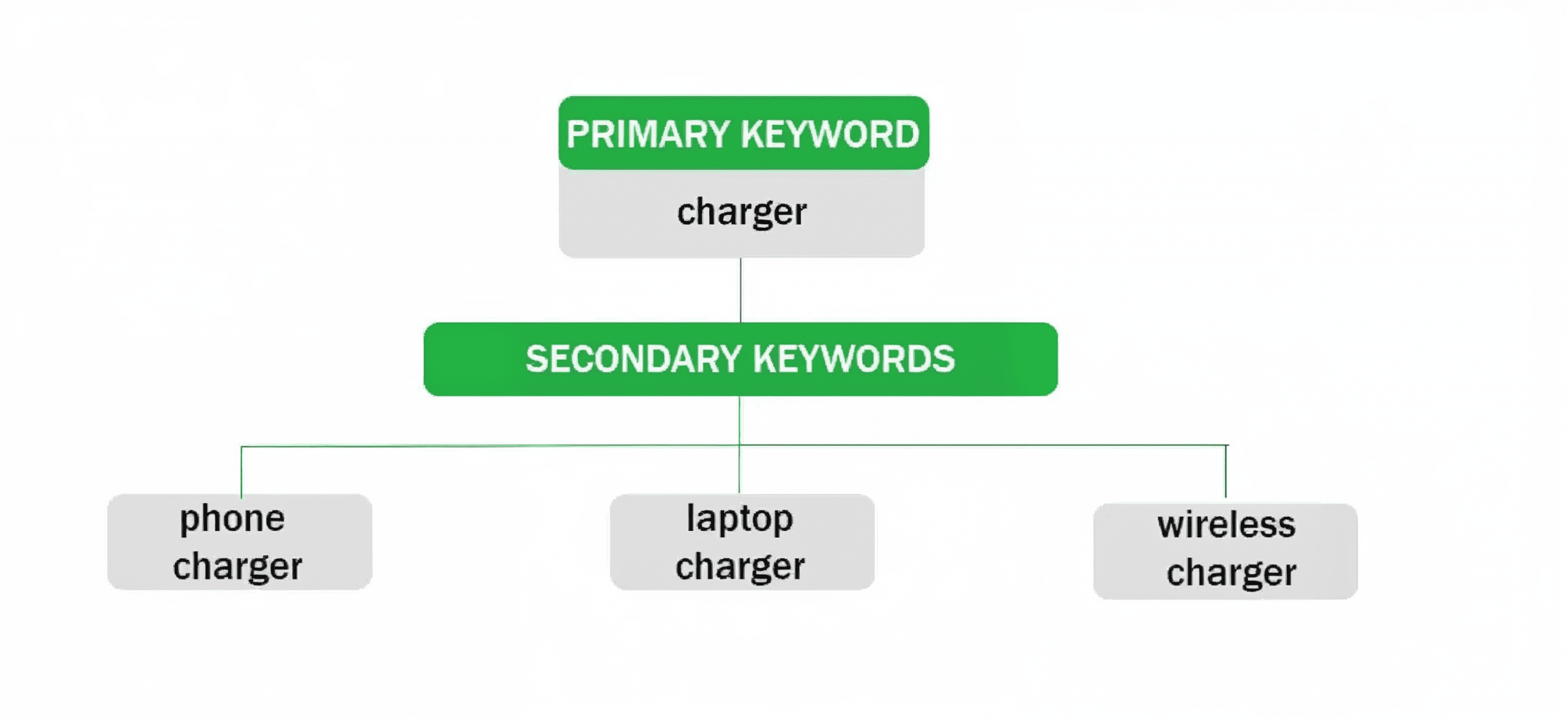
KWR shows you what your ideal customers are actually searching for. Not what you think they’re typing in – but the exact terms, questions, and phrasing they’re using.
You should also check what’s already ranking – both your own content and your competitors’.
If you’re already targeting a keyword on one page, don’t target the exact same phrase elsewhere. That’s called keyword cannibalisation, and it can confuse search engines or even hurt your rankings. Every page should have a clear purpose and its own keyword focus.
Think of KWR as the foundation – it tells you where the demand is. Your job is to meet that demand with content worth finding.
How to Write for SEO
So, you’ve done your research. You’ve picked your keywords. Now what?
Write for Humans First
This is the bit too many guides forget to mention.
Good SEO writing isn’t about tricking algorithms. It’s about creating content that helps people – because that’s what search engines are looking for. That means writing clearly, structuring your content with proper headings and logical flow, and answering real questions your users are actually asking
Google’s Helpful Content Update made this crystal clear. If your content isn’t people-first, it won’t perform – no matter how many keywords you squeeze in.
And here’s something worth knowing: search engines look at how people behave on your site. If someone clicks on your page and immediately bounces back to the results, Google takes that as a hint your content didn’t do the job. So if you’re stuffing in keywords that don’t quite match what your audience actually wants – or chasing irrelevant traffic for the sake of volume – you’re not just wasting your time.
You’re actively telling search engines your content isn’t helpful.
Write for your real audience, answer their real questions, and keep them on the page. That’s what search engines are really ranking.

Use Keywords Naturally in Key Places
There are a few spots search engines expect to find keywords – make sure yours are there:
- Page title and meta description
- Main heading (H1) and subheadings (H2s)
- First paragraph and final section
- Image alt tags (where relevant)
But don’t stop at exact matches. Semantic keywords – words or phrases that are closely related – help add variety and context. For example: “web design”, “UX”, “responsive layout” all live in the same content neighbourhood.
Ditch Outdated SEO Tactics
Let’s be blunt. Some tactics just don’t work anymore – and they’ll probably make your content worse.
- Don’t keyword stuff. Seriously. If your page is unreadable because it says “best wedding photographer” 14 times in one paragraph, start again.
- Don’t force exact matches. Search engines understand plurals, synonyms, and even misspellings. You don’t need to write every variation to get the point across.
- Don’t try to target every location. Google already knows where you’re based if you’ve done your local SEO right. Listing 12 towns in one sentence doesn’t help your case.
If you’re trying to answer lots of search questions, add an FAQ section – don’t squash them into awkward headers or half-baked sentences. Keep things clean and helpful.
Make It Easy to Read
It doesn’t matter how well-optimised your content is if no one wants to read it.
Break things up. Use short paragraphs. Add proper subheadings. If you’re explaining a complex topic, bullet points are your friend.
Link internally to other relevant pages on your site. Add images, charts, or infographics to break up long blocks of text. And always, always write like a real person.
Your users will thank you. So will Google.
Great SEO Starts with Great Content
If you want your content to rank, it has to work for people first. That means writing clearly, using keywords with purpose, and ditching the gimmicks that don’t work anymore.
SEO content doesn’t have to be complicated – but it does need to be considered.Need help fine-tuning your SEO content strategy? Work with TH3 and we’ll make sure your copy does more than just rank – it converts.
FAQs
Do I have to use exact keywords?
No. Search engines are smarter than that. Use variations, synonyms, and semantic keywords – just keep the topic clear.
How long should content be for SEO?
There’s no magic number, but you want to avoid stub content. As a general rule, aim for at least 400–500 words per page. That’s enough to offer genuine value.
Can I just use AI to write SEO content?
You can. But you shouldn’t rely on it without editing. Use it to speed up your process – not replace your voice or judgement.