

You’ve probably heard that backlinks are important for SEO – but what are they really, and how do they help your website get noticed?
Whether you’re just getting started or trying to make sense of your backlink profile, this guide breaks down the essentials: what backlinks are, why they matter, how to check them and – most importantly – how to build the good kind (and avoid the bad).
What Is a Backlink?
A backlink is simply a link from one website to another. If another site links to your website, that’s a backlink. If you link from one page of your own site to another, that’s an internal link – different thing entirely.
Backlinks help search engines understand how different websites connect to one another. They also tell Google that your site is worth referencing and that builds trust.
You’ll often see backlinks in the form of anchor text – that’s the clickable text in a hyperlink. For example:
“Check out our guide to SEO basics.”
In that sentence, the bold bit is the anchor text. Ideally, it should be descriptive and relevant. Avoid spammy or overly keyword-stuffed phrases – Google’s not a fan.
There are also two types of backlinks:
- Follow links: These pass on “SEO value” and help your site’s rankings.
- Nofollow links: These don’t pass SEO value but can still drive traffic or add credibility.
Both are valuable but, to grow your site’s authority, follow links carry more weight.
Why Are Backlinks Important for SEO?
Backlinks are one of the biggest trust signals Google uses when deciding how to rank your site. They’re a core part of off-page SEO – which is everything that happens outside your website, but still affects how it performs in search.
Here’s why backlinks matter:
- They tell search engines that other people value your content.
- They can boost your rankings in search results – especially if the links come from high-quality sources.
- They drive direct referral traffic to your site.
- They contribute to your domain authority – a score (used by many SEO tools) that predicts how well a website will rank.
Not all backlinks are created equal, though. That’s where backlink value comes in.
What Makes a Backlink Valuable?
There are a few things that determine how valuable a backlink is:
Relevance
Is the site that’s linking to you related to your industry or topic? A link from a design agency to a photography blog makes sense. A link from a pet grooming site? Not so much.
Authority
High-authority sites (like well-known publications or respected organisations) pass on more trust than newer or low-quality ones.
Context
Is the link naturally placed within meaningful content? A link in the middle of a relevant blog post is far more valuable than one tacked on in a random list.
Anchor Text
Good anchor text describes the page it links to. “Read more here” isn’t helpful. “Beginner’s guide to backlinks” is.
Placement
Links within content are more valuable than those in sidebars, footers or comment sections.
What Makes a Backlink Toxic?
Just like good backlinks can lift your site up, bad ones can drag it down. Google may ignore low-quality links, but if your site has too many it could be penalised.
Watch out for links that come from:
- Unrelated or spammy sites
- Low-authority domains
- “Link farms” (sites made purely to sell links)
- Repeated, exact-match anchor text that looks unnatural (e.g., “buy cheap backlinks now”)
If your backlink profile is full of these, it’s time to do some clean-up.
How to Check Backlinks to Your Site
Now that you know what to look for – good and bad – how do you actually check your backlinks?
Start with Google Search Console. It’s free, easy to set up, and gives you a good overview of who’s linking to your site. You’ll be able to see the number of backlinks pointing your way, which sites they’re coming from, what pages they’re linking to, and the anchor text they’re using.
Here’s what you’re looking for:
- Are your links coming from trusted, relevant websites – or are there a few that seem a bit off? A healthy profile should have backlinks from a diverse range of domains, not just one or two sources. If 80% of your backlinks come from the same place, that’s a red flag.
- Your most linked content also matters. If Google sees certain pages getting lots of attention, it assumes they’re worth showing to more people. If, on the other hand, your contact page is your top performer, something might be misfiring.
- Then there’s anchor text. Ideally, the text being linked should be relevant to your content – no vague phrases, no spammy keyword stuffing. It should feel natural and helpful, not robotic.
If you want more detailed insights – like domain authority scores, trust ratings, or spam indicators – platforms like Semrush, Ahrefs, Moz, or SE Ranking can dig deeper. These tools aren’t free, but they’re useful if you want to get serious about your SEO.
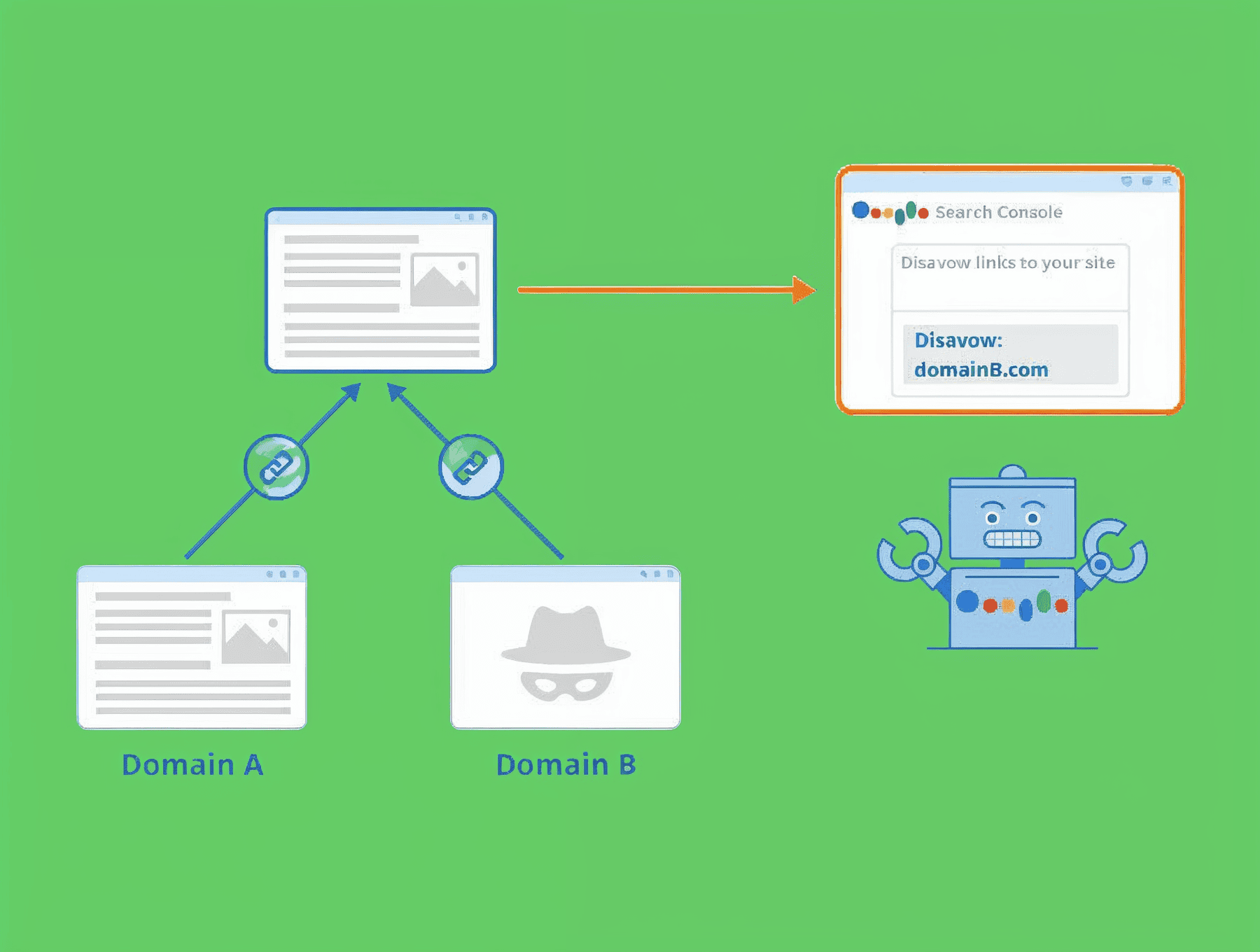
Spotted a dodgy backlink? You’ve got a couple of options. First, you can reach out to the site owner and ask them to take it down – especially if it feels like a genuine mistake. If that doesn’t work (or the site is clearly spammy), you can disavow the link using Google’s tool. That’s basically you saying, “We don’t know this site – please don’t count this link against us.”
It’s a good idea to check your backlinks regularly. Think of it like tidying up – the cleaner your profile, the more clearly Google can see your worth.
Backlink Strategies: How to Build Links the Right Way
Building backlinks takes time and effort. But the results are worth it.
Here are a few ways to get started:
- Create Shareable Content: Think in-depth guides, how-to blogs or unique research. Content that offers real value tends to get linked to naturally.
- Guest Posting on Industry Blogs: Write for trusted blogs in your industry. You’ll earn a backlink, share your knowledge and connect with new audiences.
- Local PR and Community Engagement: Get involved in your local area. Reach out to local news sites, event listings and blogs – they’re great sources of relevant, high-trust links.
- Broken Link Outreach: Spot a broken link on a blog or resource page? Suggest your content as a replacement. It helps them fix a problem and earns you a backlink.
- Partner with Complementary Businesses: Think suppliers, collaborators or friendly competitors. A mutual link can boost both your visibility and trust signals.
Remember: it’s not about racking up hundreds of links. It’s about building the right ones.
Conclusion
Backlinks are a big part of SEO success – but they’re not a shortcut. They’re something you build over time, with quality content and real connections.
At TH3, we help businesses improve their search performance through ethical, effective backlink strategies. Whether you need support building new links or auditing your current ones, we’re here to help.
Want to know how your website is performing? Get in touch for a consultation – no spam, just honest insight.
FAQs
What is backlinking in SEO?
Backlinking is the process of getting links from other websites to your own. These links act as trust signals and help boost your site’s rankings in search engines.
How do I check backlinks to my site?
Start with Google Search Console for basic info. For more detail, use tools like Semrush, Ahrefs or Moz to view link quality, anchor text and referring domains.
How can I get high-value backlinks?
Focus on creating valuable content, guest posting, building relationships, and getting featured on relevant, high-authority sites. Quality over quantity is key.
Can backlinks hurt my website?
Yes – toxic or spammy backlinks can damage your SEO. Watch out for irrelevant or low-authority links and clean up your profile if needed.
Should I use backlink generators to build my profile?
No. Most backlink generators create spammy, low-quality links. These can do more harm than good. Always prioritise natural backlink building.